
Introduction
At first glance, 264.68.111.161 looks like a typical IPv4 address, yet many professionals pause when they encounter it in logs, tools, or datasets. This article breaks down what this value represents, why it appears in real-world systems, and how to interpret it correctly without jumping to conclusions. Whether you work in IT, SEO, cybersecurity, or data analysis, understanding how such entries behave can save time and prevent costly mistakes.
What Is 264.68.111.161 Supposed to Represent?
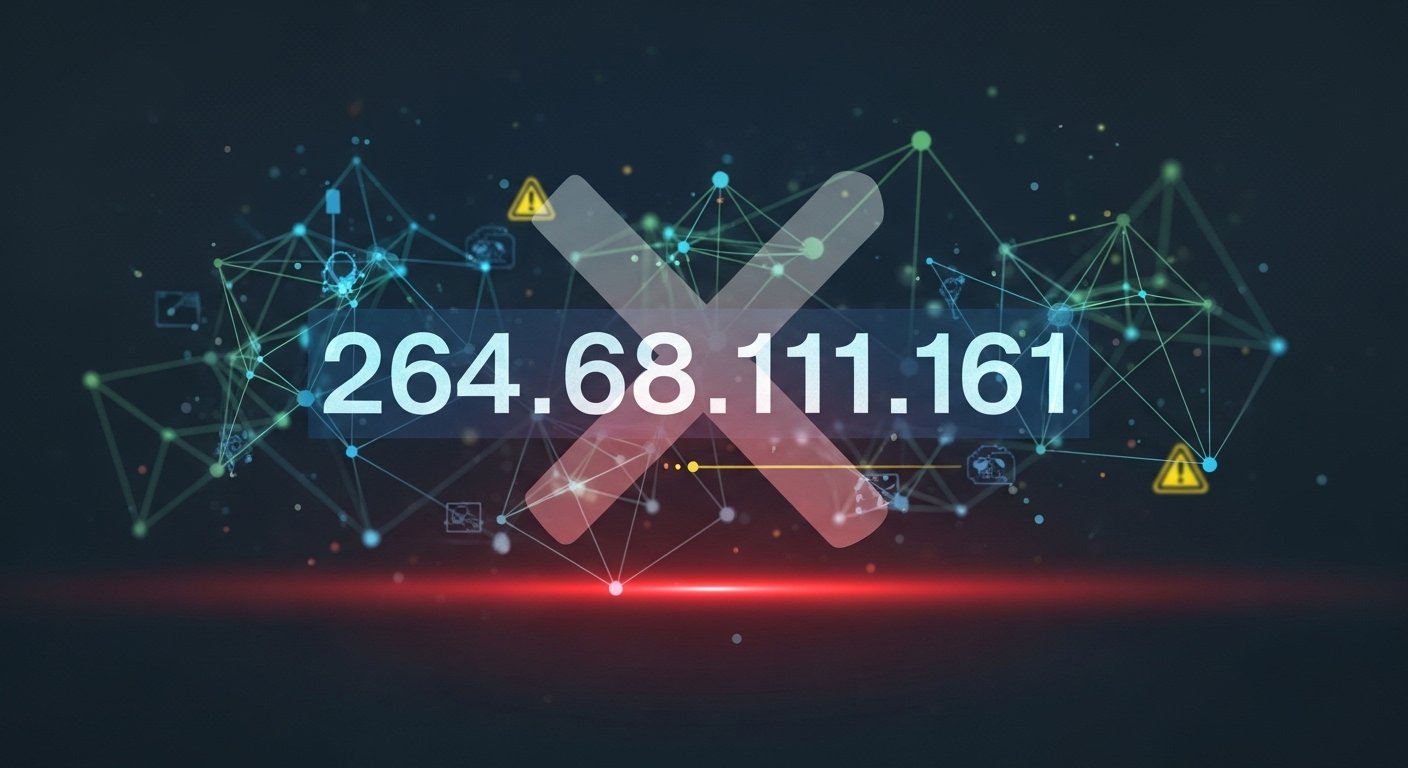
In theory, an IPv4 address consists of four numbers ranging from 0 to 255. The structure is familiar to anyone working with networks. However, 264.68.111.161 exceeds that range in its first octet, which immediately raises a technical red flag. This means it cannot function as a valid routable IPv4 address on the public internet. Instead of being a usable endpoint, it represents something else entirely.
Valid vs. Invalid IP Addresses
A valid IPv4 address must comply with strict numerical limits. Because 264.68.111.161 breaks those limits, operating systems, routers, and compliant software will reject it. Invalid IPs like this often surface due to data entry errors, placeholder values, corrupted logs, or poorly validated scripts. Recognizing this distinction helps professionals avoid chasing non-existent network issues.
Why You Might See This IP in Logs or Reports
Despite being invalid, 264.68.111.161 may still appear in analytics dashboards, server logs, or security reports. This usually happens when systems ingest raw, unvalidated input. For example, a misconfigured tracking script or a testing environment might generate synthetic data that includes such values. Understanding the context prevents unnecessary alarm.
Security Implications and Misinterpretations
When analysts see unfamiliar IPs, the first concern is often malicious activity. While caution is healthy, 264.68.111.161 should not automatically be treated as an attacker’s address. Since it cannot exist on the public internet, it is more likely tied to internal errors or malformed requests. Flagging it correctly reduces false positives and keeps security teams focused on real threats.
The SEO and Analytics Perspective
From an SEO standpoint, data cleanliness matters. If crawl logs or traffic reports include 264.68.111.161, it can distort analytics and mislead decision-making. Search professionals should filter out invalid IP entries to ensure accurate insights into user behavior, bot activity, and server performance. Clean datasets lead to better optimization strategies.
Troubleshooting When You Encounter It
When 264.68.111.161 shows up, the first step is tracing its source. Check input validation rules, API responses, and log parsing methods. Often, a single unchecked field or test value causes repeated appearances. Fixing the root cause improves system reliability and data integrity without overengineering a solution.
Data Quality and Engineering Lessons
Invalid values like 264.68.111.161 highlight the importance of defensive programming. Engineers should enforce strict validation at every data entry point. This prevents impossible values from traveling downstream and contaminating reports, alerts, or machine learning models. Strong validation is not optional; it is foundational.
Best Practices for Handling Invalid IP Entries
Rather than deleting entries blindly, label and categorize them. When 264.68.111.161 appears, tag it as invalid and review frequency patterns. Repeated occurrences often signal automation errors, while isolated cases may be harmless anomalies. This balanced approach keeps audits transparent and actionable.
A Practical Example
Imagine a large website analyzing traffic sources. A sudden spike involving 264.68.111.161 might look suspicious. Upon investigation, the team discovers a staging script accidentally pushed to production. By identifying the IP as invalid instead of hostile, they fix the script quickly and restore accurate reporting.
Conclusion
While it resembles a normal address, 264.68.111.161 is technically impossible as a real IPv4 endpoint. Its appearance usually points to data quality issues rather than real-world network activity. By understanding why such values exist and how to handle them, professionals can maintain clean systems, accurate analytics, and effective security workflows without wasted effort.