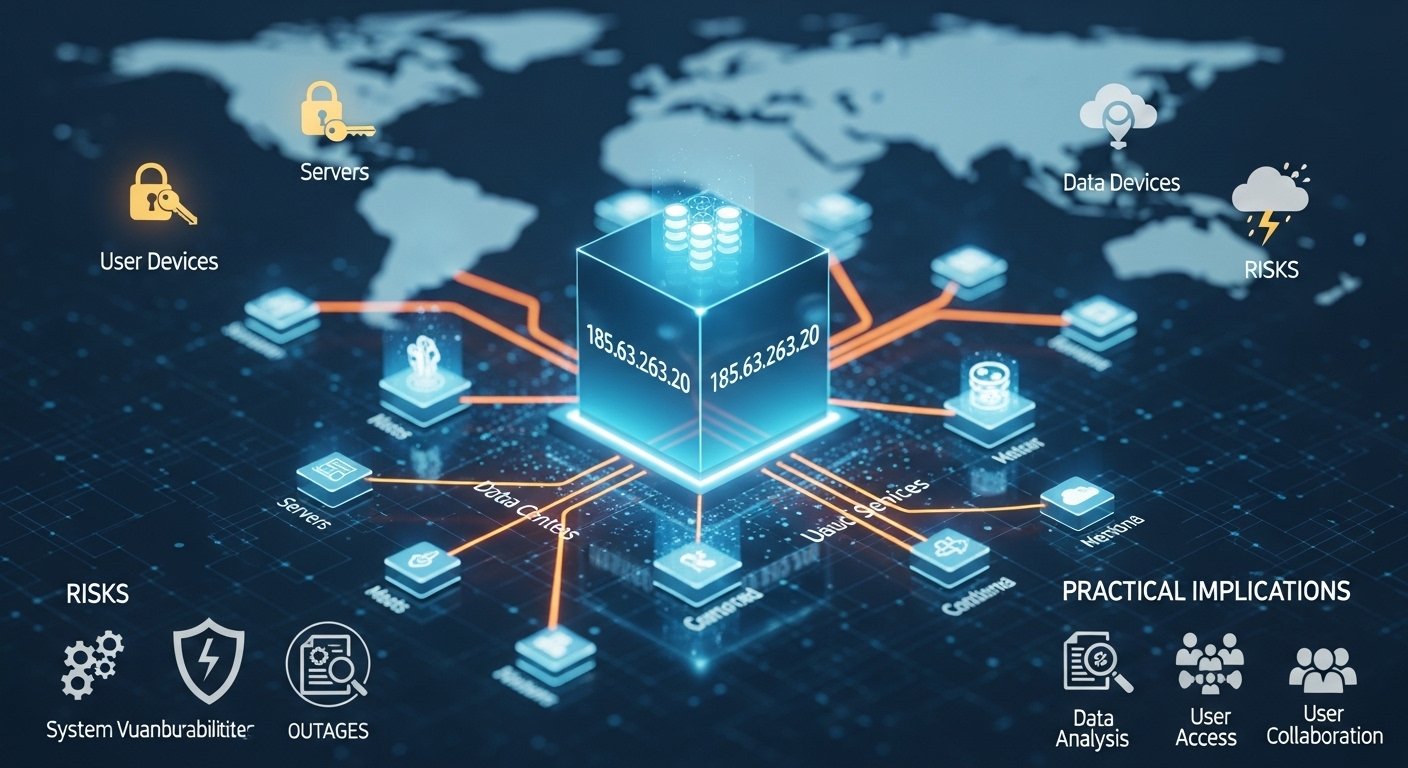

In today’s interconnected digital landscape, every device that connects to the internet leaves behind a numerical trail, and one such example is 185.63.263.20. At first glance, it may appear to be just another string of numbers, but an IP address like this can reveal important insights about servers, traffic behavior, cybersecurity risks, and online infrastructure. Whether you are a website owner, digital marketer, or cybersecurity enthusiast, understanding how an IP such as 185.63.263.20 functions can help you make smarter technical and strategic decisions.
What Is an IP Address and Why It Matters
An IP address is a unique identifier assigned to devices connected to a network. It allows systems to communicate, send data, and receive responses accurately. When you type a website URL into your browser, your device communicates with a server through an IP address behind the scenes.
The structure of 185.63.263.20 resembles an IPv4 address, which is composed of four numerical segments separated by dots. Each segment typically ranges from 0 to 255. From a technical standpoint, professionals examining 185.63.263.20 would first validate its formatting, determine its allocation range, and analyze its hosting provider or geographical association.
For businesses managing websites or online platforms, monitoring IP addresses like 185.63.263.20 can help identify legitimate traffic, suspicious login attempts, or repeated bot activity.
Analyzing 185.63.263.20 in a Technical Context
When cybersecurity teams encounter 185.63.263.20 in server logs, they typically examine several factors:
Geolocation and Hosting Provider
Every IP block is assigned to a specific organization or data center. By checking the registration details, analysts can determine which network controls 185.63.263.20. This helps assess whether traffic from that IP is likely to be residential, corporate, or data-center based.
Understanding the origin of 185.63.263.20 also assists in filtering regional traffic patterns. For example, if your business operates only in one country and repeated traffic appears from a foreign IP range, it may warrant closer inspection.
Traffic Behavior and Patterns
Raw IP data alone tells little without context. If 185.63.263.20 appears repeatedly in login attempts, scraping activity, or unusual access requests, that pattern becomes meaningful. Analysts evaluate frequency, request types, and time intervals.
In contrast, if 185.63.263.20 only appears occasionally and performs normal browsing actions, it is likely benign.
Reputation and Blacklist Checks
Security systems often maintain internal or external reputation databases. If 185.63.263.20 has been flagged previously for spam, brute-force attacks, or malicious scanning, it may carry a negative trust score.
However, IP addresses can be reassigned. A previously flagged address does not automatically mean current malicious intent. That is why continuous monitoring is more reliable than static labeling.
Potential Risks Associated with Unknown IPs
Website administrators frequently notice unfamiliar IPs in analytics dashboards. Seeing 185.63.263.20 in logs does not immediately signal danger, but ignoring unknown activity can expose vulnerabilities.
Brute-Force Attempts
Repeated login failures originating from 185.63.263.20 could indicate automated attempts to guess credentials. Implementing rate limiting, CAPTCHA verification, and strong password policies reduces risk significantly.
Data Scraping
If 185.63.263.20 sends rapid requests to product pages or blog content, it might be scraping data. Businesses concerned about intellectual property often use firewall rules to limit such behavior.
Server Probing
Sometimes attackers test servers for open ports or outdated software. If 185.63.263.20 appears during vulnerability scans, reviewing firewall logs and patch levels becomes essential.
When 185.63.263.20 May Be Completely Harmless
Not every unfamiliar IP address is malicious. In many cases, 185.63.263.20 could belong to:
- A legitimate data center
- A VPN user
- A search engine crawler
- A monitoring service
Modern infrastructure relies heavily on shared hosting environments, meaning multiple websites may operate under similar IP ranges. Blocking 185.63.263.20 without proper investigation could disrupt valid users or services.
Best Practices for Handling IP Addresses Like 185.63.263.20
Instead of reacting emotionally to unfamiliar traffic, adopt a structured approach.
Monitor Before Blocking
Track how often 185.63.263.20 appears and what actions it performs. Consistent malicious patterns justify blocking; occasional visits may not.
Use Firewall Rules Wisely
Web application firewalls allow administrators to restrict or challenge traffic from specific IPs. If 185.63.263.20 demonstrates harmful behavior, temporary restrictions are safer than permanent bans.
Strengthen Overall Security
Rather than focusing solely on 185.63.263.20, improve your overall security posture. Enable two-factor authentication, keep software updated, and configure intrusion detection systems. A secure system withstands threats regardless of origin.
The Broader Importance of IP Awareness
Understanding addresses like 185.63.263.20 goes beyond cybersecurity. Marketers analyze IP-based data to understand audience geography. Hosting providers manage IP allocations to balance performance. IT teams monitor server IPs to ensure uptime.
In a data-driven world, IP literacy empowers decision-making. Instead of treating 185.63.263.20 as just a random number, consider it part of a larger digital ecosystem where identity, communication, and security intersect.
Conclusion
The IP address 185.63.263.20 represents more than a numerical label—it reflects how modern networks identify, route, and manage internet communication. Whether encountered in server logs, analytics dashboards, or firewall alerts, it should be evaluated with context and evidence. Careful monitoring, pattern analysis, and balanced security practices ensure that addresses like 185.63.263.20 are handled intelligently rather than impulsively. By understanding how IP systems function and implementing proactive safeguards, businesses and individuals can maintain stronger, more resilient digital environments.